Romie:
Infinite travel, one assistant
The Insight
People talk about travel constantly—in group chats, asking for recommendations, and obsessively searching. But booking was just a transaction: pick dates, filter, and hope for the best.
The real issue? Google was the dominant first stop. When people didn't know where to go or what to do, they left the booking sites for Google. Travel brands like Expedia were essentially renting customers from Google, stopping the natural "book-enjoy-book again" cycle.
Before GenAI, you couldn't beat Google at the start of the planning process. Now, GenAI changes everything. For the first time, a travel brand can actually help people where planning happens—in a natural conversation.
“If you’re not in that dance at all, you’re beholden to whatever happens outside. You don’t have any leverage, and you don’t have a competitive differentiator.”
The Invention
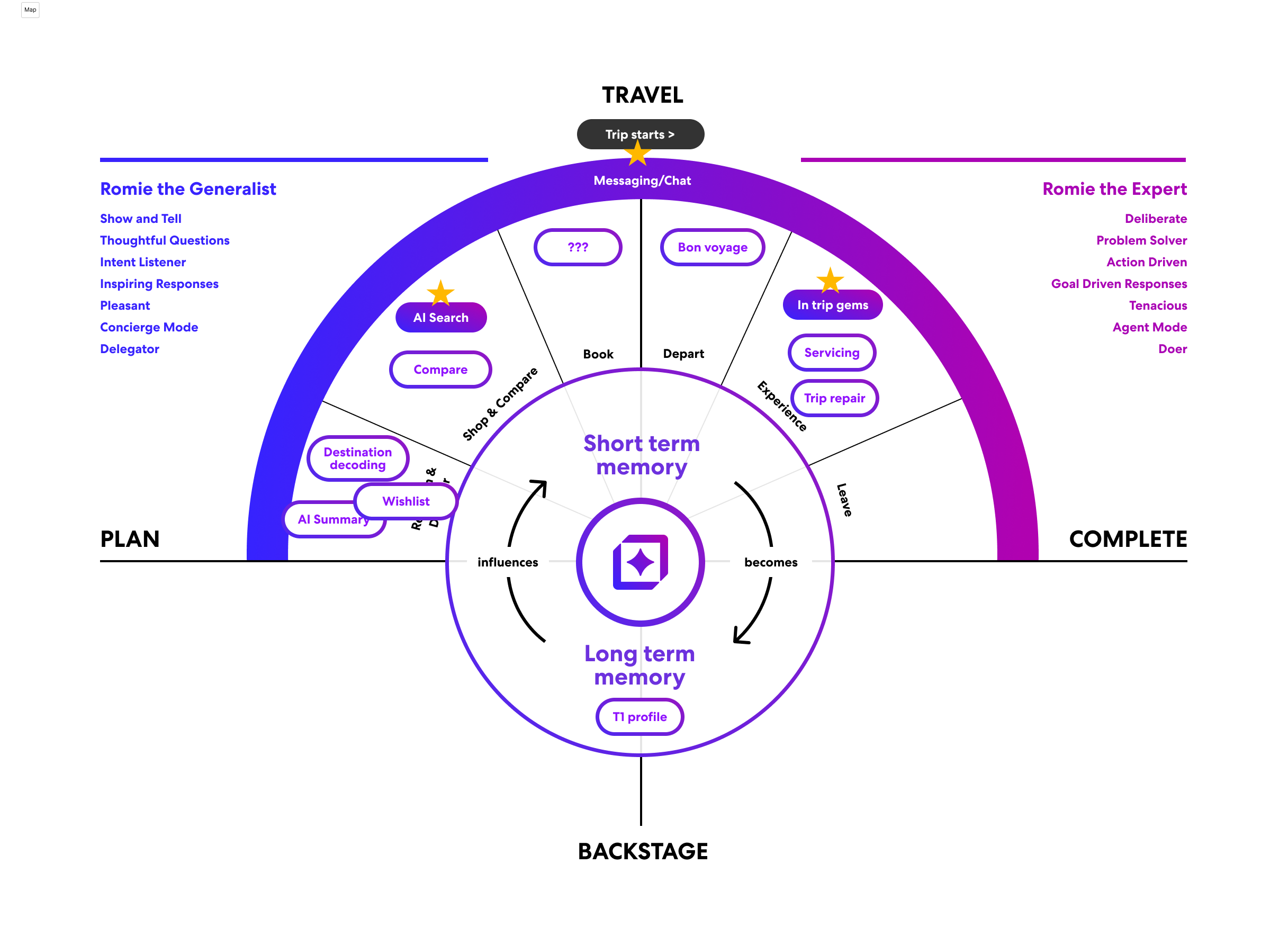
Romie is an AI travel agent that meets travelers where they are. It's built into the Expedia app but also extends to iMessage, WhatsApp, and other group chats—the idea being to join the planning conversation instead of making people come to us.
Romie tackles three main travel problems:
Discovery: Helping people figure out where to go and what kind of trip they want.
Findability: Using natural language to find hotels and experiences, ditching those rigid filters.
Real-time Servicing: Proactive alerts for weather issues, flight delays, and alternative options when plans change.
The Build
Yelp Screen
Romie was built on a combination of Expedia’s proprietary inventory and OpenAI models, with real-time integrations pulling in data from AccuWeather, Yelp, and other sources to give responses genuine situational context.
What the press coverage never captured was the degree of creative problem-solving required to build Romie at a moment when the technology was still catching up to the vision. The models were less capable, the tooling didn’t exist yet, and the timeline was unforgiving. The team didn’t simplify the ambition to fit the constraints — they found ways to engineer around them. Looking back with today’s models, MCPs, and agent frameworks, some of those solutions would be straightforward. At the time, they required genuine ingenuity.
The team also stayed anchored relentlessly to real human needs throughout. This wasn’t a project chasing what AI could do. It was a project asking what people actually need when they’re trying to plan a great trip — and then finding ways to deliver it within the constraints of what was possible.
The Validation
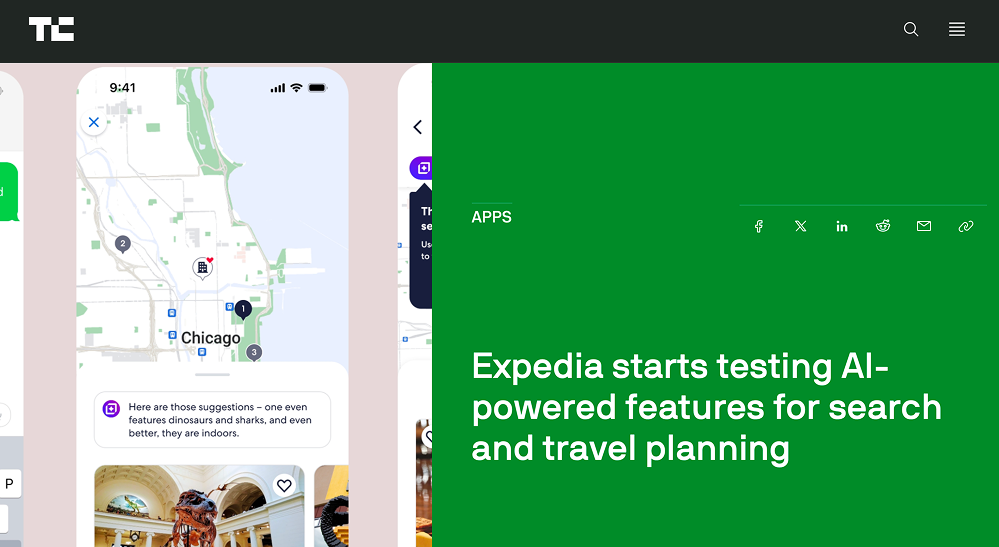
Romie debuted publicly at Expedia’s Explore ’24 conference in May 2024 and was cited by Expedia CTO Rathi Murthy as a competitive differentiator. TechCrunch covered the launch, positioning Romie as “travel agent, personal assistant, concierge.” It reached C-level adoption as Expedia Group’s flagship AI initiative within months of launch.
One moment captured the internal impact: the incoming CEO saw a demo of a Yelp integration midway through development. She looked genuinely stunned — “I cannot believe we are actually doing something like this.” That reaction wasn’t about the feature. It was about what it meant for Expedia as an organization: that in spite of real technological headwinds, there were people inside the company willing to push forward.
Learnings & Future Vision
Romie’s most significant impact wasn’t measured in bookings — it was organizational. It demonstrated to leadership that genuine AI innovation was possible under real constraints, and it shifted the internal conversation from “should we do this” to “how do we keep going.”
Key learning: where a product lives must match the user’s readiness for brand interaction in that space. The messaging integration worked technically, but the deeper insight was that ambient AI companions require a trust runway — people need to discover and opt into that kind of relationship, not have it introduced into their most personal threads. Future iterations would focus on earning presence in those contexts gradually, starting from the Expedia app and extending outward as users invite Romie into more of their planning life.
The broader vision remains: a travel AI that follows the trip, not just the booking. One that is genuinely useful before departure, during the journey, and after — building a relationship that makes every subsequent trip better than the last.